


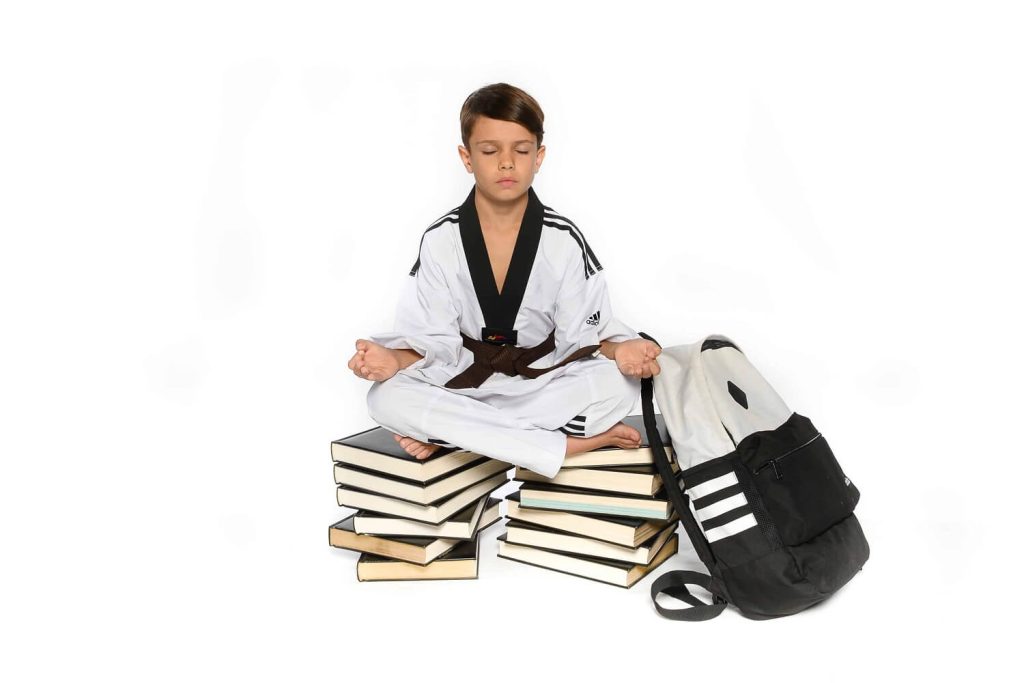
Psychiatrists are now working towards encouraging their patients to incorporate exercise in their lifestyle, instead of immediately prescribing pills. If your child works on their physical activity at a young age, he/she will be able to effectively deal with the inevitable challenges of life.
Here is what improvements you can expect to see in your child’s mental health when they enroll in our Taekwondo classes in Milton or Oakville.
Cognitive Function
One of the most important benefits of exercise in children is improved cognitive function. This includes memory, better aptitude, increased focus, better decision-making powers, effective mood regulation, delaying instant gratification, and working through difficult times. If a child becomes competent only through exercising at a young age, they will have a better trajectory and chances of success than their contemporaries. Often people struggle with instilling these habits, but exercising for ninety minutes consistently, especially during your formative years can give a much-needed jump start.
Decline in Anxiety
Psychologically, anxiety is considered to be a highly charged state – one becomes more vulnerable and sensitive to every negative thought. Thus, channeling this energy into exercise has been known to calm down individuals. Children are prone to developing generalized anxiety disorders from a very young age. Hence, incorporating exercise into their normal routine significantly reduces their chances of developing it. Moreover, exercising also decreases levels of cortisol, the stress hormone, in your body. This will help maintain levels at baseline, later in life as well.
Reduced Signs of Depression
Every time you work out, the brain releases serotonin. This is a key chemical mediator that is used in Fluoxetine, a serotonin reuptake inhibitor prescribed for juvenile depression. As noted earlier, psychiatrists are switching to making lifestyle changes instead of prescribing pills – since they tend to have adverse effects. Unlike, exercising which essentially works on the same mechanism – it increases the production of serotonin, instead of prolonging its reuptake; the latter is done through medications. Fluoxetine also reduces obsessive-compulsive disorder – this too can be possibly reduced through exercise, although there is limited research.
Boost in Self-Esteem
Although this benefit is considered short-termed, it can help your child grab more opportunities and explore more avenues. Children who have higher self-esteem have higher chances of taking up responsibility and leadership positions at a young age. Thus, they end up learning more through real-life experiences. Challenging exercises such as swimming, playing soccer, and karate can help build a stronger work ethic and resilience.
Neurogenesis
Every time your child exercises, the brain releases neurotrophic factors. This is responsible for the development of new cells in the temporal and prefrontal cortex. The temporal region is responsible for memory, thus helping your child secure better grades and learn concepts faster. Whereas the prefrontal cortex is involved in executive function, this equips your child with the capability of pushing through challenging tasks. Neurogenesis becomes more important knowing that the brain continues developing well over adulthood – thus, a boost in the developmental and proliferative phase is crucial before the growth becomes steadier, later in life.
Reduces Attention Deficit Disorder
A growing concern in the times of the internet – when knowledge is being consumed through pictures, and three minutes long videos. Children being exposed to these tidbits of knowledge are finding it harder to focus for long hours studying a subject. Thus, most students end up being at an attention deficit and fail to apply themselves in school – even though they are extremely capable. This can be evaded, at least in mild to moderate conditions of ADD. Research has been done to establish that only half an hour of exercise can boost mental focus for two hours. Consistent exercise can thus significantly improve mental performance over longer periods.
Better Sleep
This would probably be delightful news for most parents. Exercising daily helps with the effective release of melatonin by lowering cortisol levels. Melatonin is responsible for inducing sleep – this not only helps with recovery but also improves cognitive function through prolonged periods of rest and consistent sleep cycles.
Bottom line is that most mental deficiencies arise from decreased oxygen perfusion to the brain – especially since the heart has to pump harder to circulate blood to the upper body, against gravity. In this case, consistent exercise is crucial for the brain’s growth and nourishment.
What Counts as Regular Physical Activity?
- Team Sports: Soccer, basketball, or volleyball build teamwork, discipline, and self-confidence.
- Dance: Whether hip-hop, ballet, or just dancing around the living room, it’s a joyful way to stay active.
- Walks and Bike Rides: Exploring the neighbourhood or a nearby park is an easy way to integrate movement.
- Swimming: This exercise is great for full-body physical activity and building water confidence.
- Frisbee or Catch: These are simple activities that encourage movement and coordination.
- Skateboarding or Rollerblading: These are fun ways to build balance and agility.
- Jump Rope: It is an inexpensive, portable activity that enhances cardio fitness and coordination.
- Trampoline Time: Jumping on a trampoline can improve balance and core strength while feeling like playing.
- Hiking: Exploring trails introduces children to nature and provides a workout for their legs and lungs.
- Yoga: Kids can improve flexibility and mindfulness with fun, age-appropriate poses.
- Active Video Games: Games that require physical interaction, like dance or sports games, can be a great indoor option.
- Climbing: Whether on a playground, rock wall, or tree, climbing builds strength and problem-solving skills.
The Science Behind Physical Activity and Brain Function
- Increased Blood Flow: Physical activity boosts blood flow to the brain. The blood flow helps deliver oxygen and nutrients that improve focus and learning.
- Neurogenesis: Physical activity stimulates the production of new neurons, particularly in the hippocampus, which is critical for memory and learning.
- Stress Reduction: Physical activity lowers cortisol levels. It reduces stress and anxiety while increasing the production of mood-enhancing endorphins.
Taekwondo Classes: A Holistic Tool for Brain Development
- Cross-Lateral Movements Build Brain Connections
- Problem-solving skills
- Memory and recall
- Multitasking ability
- Sparring Boosts Problem-Solving Skills
- Critical thinking
- Adaptability
- Confidence under pressure
- Obstacle Course Challenges Encourage Out-of-the-Box Thinking
- Crawling under ropes develops spatial awareness
- Balancing on beams improves focus and core strength
- Jumping over hurdles builds resilience and agility
- Forms and Patterns Improve Memory and Discipline
- Sharpen memory skills
- Build discipline and patience
- Develop attention to detail
How to Encourage Physical Activity at Home
- Lead by Example: Show your child that physical activity is important by staying active yourself. Go for family walks or join them in a quick game of tag.
- Celebrate Progress, Not Perfection: Focus on effort and improvement rather than competition or mastery.
- Create Fun Challenges: Can your child do 10 jumping jacks in 30 seconds? How many steps can they climb in a minute? Make it a game!
- Offer Choices: Let your child pick the activities they enjoy most.
- Set a Routine: Schedule regular times for physical activity, whether it’s a Taekwondo class, a bike ride, or a dance-off in the living room.
- Mix It Up: Rotate activities to keep things exciting. One day could be an outdoor hike, and the next day, a home obstacle course.
- Make It Social: Encourage your child to invite friends to join to make physical activity more fun.
- Reward Consistency: Celebrate milestones, like completing a month of regular activity, with small rewards like stickers or extra playtime.
Making Taekwondo a Family Activity
- Build stronger relationships
- Share goals and celebrate achievements
- Strengthen physical and mental resilience
- Model a lifelong commitment to health and learning
- Improve communication and teamwork
- Develop mutual respect and understanding
- Create lasting family traditions